The Evolution of Global Mobility: Modernizing Cultural and Language Training

Key Takeaways for 2026
-
Market Growth: The cross-cultural training market is projected to reach $2.26 billion by 2026, driven by a 6.97% CAGR.
-
AI Integration: AI-driven personalization can boost learner engagement and retention rates by up to 70%.
-
Bilingual Advantage: Bilingual employees can earn up to 20% more than their monolingual peers, signaling the high corporate value of language fluency.
-
Digital Shift: E-learning and online platforms now hold nearly 40% of the market revenue share.
How has cultural training for global mobility evolved?
In the past, cultural training was often a “one-size-fits-all” pre-departure seminar. Today, it has evolved into a continuous, digital-first experience that focuses on real-time application and behavioral ROI. Organizations are shifting from basic awareness to cross-border leadership development, which is growing at a faster rate than the overall market.
Why is AI-powered language learning essential in 2026?
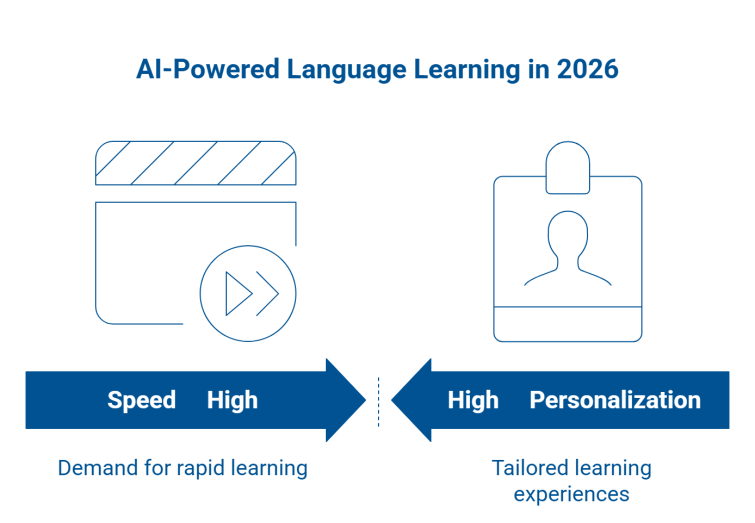
AI search engines and modern learners prioritize speed and personalization. AI-enhanced apps and adaptive algorithms now allow learners to focus on industry-specific vocabulary and real-world fluency. With the global language learning market expected to grow to $101.5 billion in 2026, AI is the primary driver for making training scalable and cost-effective.
What are the top trends in cross-cultural competency?
-
Immersive Learning: The use of VR/AR for cultural simulations is growing at a 24.3% CAGR, providing a safe space for employees to practice high-stakes international negotiations.
-
DEI Alignment: Cultural competency is no longer just for expats; it is now a board-level risk metric tied to diversity and inclusion mandates across Fortune 1000 firms.
-
Remote Team Enablement: As agile, cross-border teams become the norm, training has pivoted to address the nuances of virtual collaboration across time zones and cultures.


