Global Hiring Challenges: 4 Key Obstacles Companies Must Overcome

The rise of global employment is a move in the right direction for many companies. The advantages of companies hiring globally include new market insights and diverse perspectives that can drive innovation. However, companies should be wary of the potential challenges involved with entering the global talent market. We have laid out a few challenges to expect, and the strategies for overcoming them.
According to recent global workforce studies, more than 70% of organizations are expanding their international hiring efforts to access specialized talent and support global growth. However, companies that hire employees internationally must navigate a complex landscape of tax regulations, cultural differences, and workforce coordination challenges.
Coordinating International Teams Across Time Zones
While global talent is a significant asset, keeping international employees aligned with company goals can be complex. In 2024, global employment tools have advanced significantly, yet cultural and operational gaps remain. Effective communication and collaboration are essential to ensure that employees, no matter their location, reflect the company’s values and mission.
For example, a U.S.-based company managing employees in Europe and Asia may face 8–12 hour time differences, making real-time meetings difficult. Many global organizations solve this challenge by implementing overlapping working hours and asynchronous collaboration tools to maintain productivity.
Thankfully, the presence of remote work has allowed for companies to utilize tools that make it easier to conduct online meetings, plan virtual events, and communicate tasks. However, here are some things that should be taken into consideration before using these tools:
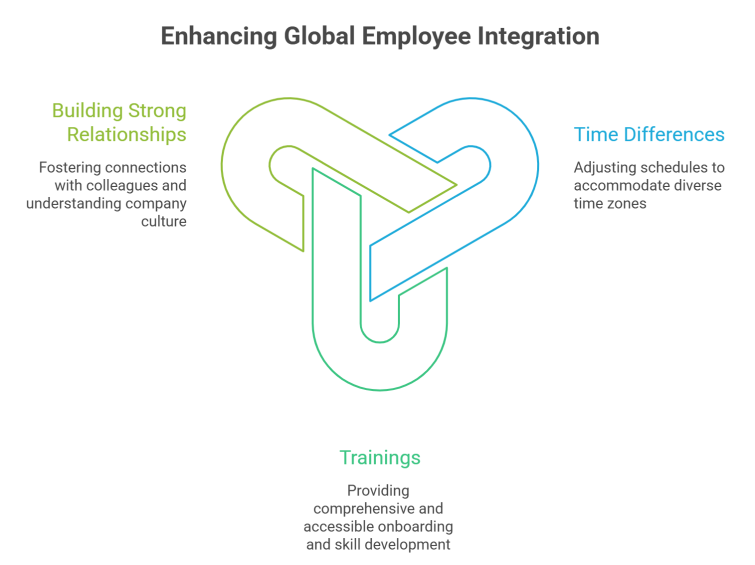
- Time differences: Not every time will be mutually desired for your global employees. When scheduling meetings or online work events, be mindful that the time in your designated time-zone may fall out of your employee’s daily work hours. Finding an agreed upon time to conduct business and improve employee relations will help your employee with productivity while remaining respectful of their timesheet. Traditional standard working hours may need to become flexible.
- Trainings: Any new hire will have questions, regardless of your training program. It is important that your on-boarding trainings, as well as any skill development modules, are comprehensive and easily accessible on an online platform. Be sure that your platform can be accessed by all countries involved, especially those that have restricted access.
- Building Strong Relationships: A great way to enhance employee coordination and responsibility is by allowing your new hire to know your firm inside and out–this includes your other employees. It is important to give your employee the time and space to establish relationships with their fellow co-workers. Scheduling one-on-one meetings with their team and others who work for your company will help your employee feel more accustomed to their expectations while fulfilling an interactive work culture.
Managing Global Tax Compliance and Employment Regulations
Navigating international tax regulations remains a challenge in global hiring, especially with frequent updates in 2024. As a global mobility manager, ensure compliance with each country’s tax expectations. Cross-border tax issues can lead to penalties, so regular consultation with tax experts and familiarity with international payroll platforms are critical.
Common Global Employment Compliance Challenges
- Navigating local labor laws and employment contracts
- Managing international payroll and tax withholding
- Understanding permanent establishment risks
- Meeting country-specific reporting requirements
Tip: Many international payroll solutions now offer tax-compliance support, which can simplify processes and reduce the risk of errors.
Many organizations partner with global mobility and relocation providers to help ensure compliance when hiring or relocating employees internationally. These partners help coordinate relocation logistics, immigration requirements, and tax considerations.
Navigating Salary Expectations and Benefits Across Countries
Salary and employee benefits also have the potential to vary when hiring globally. Employees in different countries may have different monetary and pay rate schemes based on their place of residence. It’s important to research the cost of living in those areas through your data providers and evaluate on a regular basis. Inflation may not occur at the same rate as your home country. The pay rate may also be different. For example, in the US you are most likely to be paid on a weekly or biweekly basis, but in the EMEA region, they are typically paid monthly.
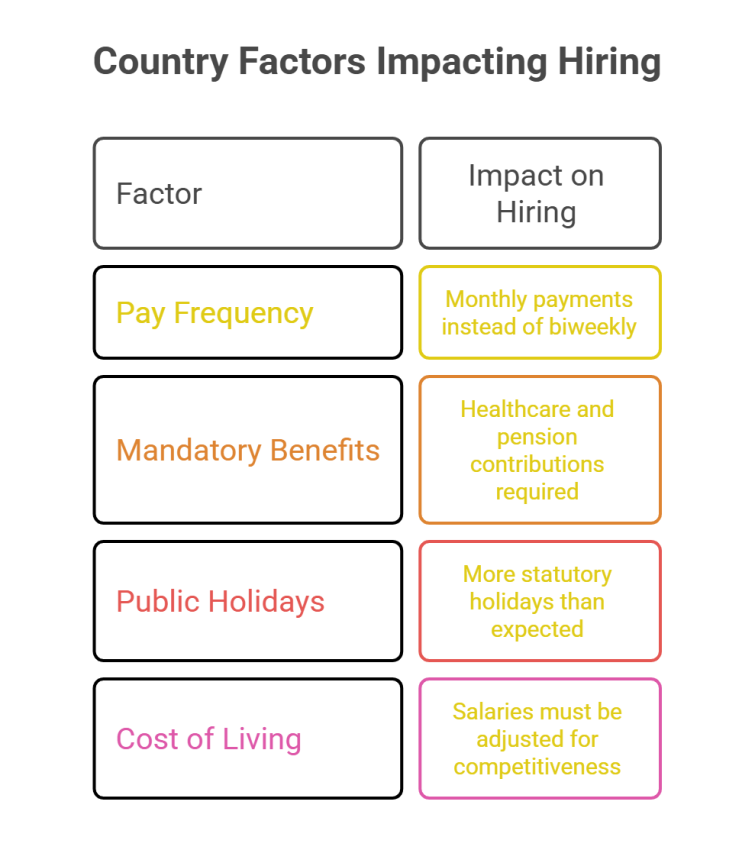
Additionally, the general employee benefits such as expected PTO or public holidays may bring forth different needs and will require flexibility. The number of public holidays can vary drastically between locations, and it should be expected that employees will follow the public holidays in their working location. It may feel strange to allow 20 holiday days for an employee in one location and only 5 in another location, but in several countries public holidays and allotted PTO are law and should be researched.
Before hiring globally, it is extremely important to ensure that you do your research. Become familiar with the culture in that particular area and what employers are doing in that specific country to accommodate their employees. Research the average and expected salary of the position you’re hiring for in that country. The more prepared you are, the better the outcome for both you, your potential new employee, and your company’s reputation. Having a good reputation will help your company with hiring in the future.
To remain competitive in the global talent market, organizations should benchmark salary and benefits packages using reliable international compensation data.
Addressing Cultural Differences in Global Teams
Cultural diversity brings fresh ideas and perspectives but can sometimes introduce differences in work habits and expectations. For global teams to thrive:
- Set Clear Expectations Early: Transparent expectations on performance, communication, and productivity help international employees understand what’s expected.
- Embrace Diverse Approaches: Different perspectives can enhance innovation. Allow flexibility for global hires to work in ways that are efficient for them, provided they align with your broader business goals.
- Promote Cross-Cultural Collaboration: Regular collaborative efforts can help bridge cultural differences. Consider virtual team-building events or cultural exchange sessions to foster a sense of belonging.
Strategies for Managing Cultural Differences
- Provide cross-cultural training for managers
- Encourage inclusive communication practices
- Establish clear expectations for collaboration
- Promote cultural awareness within global teams
How Global Mobility Programs Support International Hiring
Hiring globally becomes significantly easier when organizations have structured global mobility programs in place. These programs help companies manage the logistics, compliance, and employee experience involved in relocating or supporting international hires.
Global mobility providers can assist with:
- Employee relocation planning
- Immigration and visa coordination
- Global payroll alignment
- Destination support for employees and families
While global hiring presents operational and regulatory challenges, organizations that plan strategically and leverage experienced global mobility partners can successfully build high-performing international teams. With the right preparation, hiring globally can unlock new talent, strengthen innovation, and support long-term business growth.
Insights + Resources
View all
The UK Skilled Worker Visa in 2026: What HR Mobility Teams Need to Know Before They Sponsor

New Federal Housing Law, New Relocation Risks: What Mobility Leaders Need to Watch

California AB 692 and the New Reality for Relocation Benefits
