Moving Tax Deduction Reinstatement: What It Means for Employee Relocation

Since the Tax Cuts and Jobs Act (TCJA) suspended the moving tax deduction in 2018, both employees and businesses have felt the pinch.
Before 2018, employees relocating for work could deduct qualified moving expenses such as transportation, storage, and travel costs. The suspension of this deduction significantly increased the financial burden associated with employee relocation, often requiring employers to adjust relocation policies or offer additional compensation to offset these costs.
This deduction, which used to help cover the costs of moving for work, won’t be available again until at least December 31, 2025. But there’s hope on the horizon: efforts are ramping up to bring it back.
Advocating for Moving Tax Deductions
The Worldwide Employee Relocation Council (WERC) is leading the charge to bring back the moving tax deduction. Teaming up with the American Trucking Association (ATA) and the International Association of Movers (IAM), they’ve created the Relocation Mobility Coalition. This group is working hard to gather support and push for reinstatement of these crucial deductions. Restoring this benefit could offer up to $1 billion in annual relief, making a big difference for both businesses and individuals dealing with relocation costs.
Key Organizations Supporting the Reinstatement
- Worldwide Employee Relocation Council (WERC)
- American Trucking Associations (ATA)
- International Association of Movers (IAM)
Members of the Relocation Mobility Coalition
Why Reinstating Moving Tax Deductions Matters
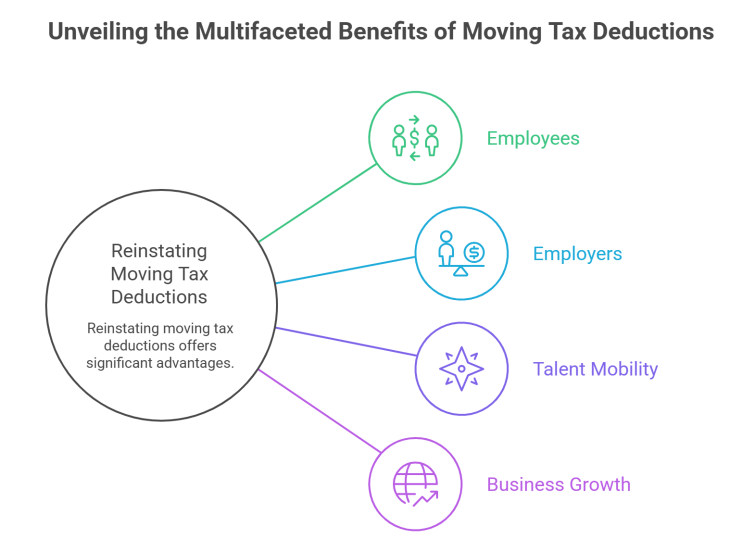
Moving for work can be tough on employees’ wallets, especially without any tax breaks to help with the expenses. Bringing back the moving tax deduction could ease that financial burden, making it easier for people to take on job relocations. Businesses would benefit, too, by saving on relocation costs and making their programs more efficient and affordable.
How Moving Tax Deductions Could Benefit Employers
- Reduce the overall cost of corporate relocation programs
- Encourage employees to accept relocation opportunities
- Improve workforce mobility and talent deployment
- Support recruitment for hard-to-fill roles in other locations
The job relocation tax deduction can serve as a vital lifeline for employees considering a move for work-related reasons, especially in an era where geographic flexibility is increasingly relevant. As remote working gains traction, more employees find themselves needing to relocate to areas that better suit personal and professional needs. For example, employees relocating across states for a new role may face thousands of dollars in moving expenses, including transportation, temporary housing, and storage costs. Without tax deductions, these expenses often become fully taxable benefits, increasing the financial burden for both employers and employees.
Reviving this tax benefit could significantly reduce financial strains associated with relocation, thereby encouraging career advancement and helping businesses draw talent from a wider pool.
With tax relief for moving expenses potentially back, businesses can play a role by supporting these advocacy efforts. By joining the conversation and reaching out to members of Congress, companies can help ensure that this important tax benefit is reinstated.
Tax incentives for business relocation often act as a catalyst for companies considering a move, offering financial relief that can significantly offset the costs associated with transitioning operations to a new locale. These incentives not only make relocation financially feasible but also provide companies the flexibility to reallocate resources toward other strategic initiatives, enhancing their competitive edge. By embracing relocation informed by these incentives, businesses can optimize their tax efficiency and potentially unlock new avenues for market expansion.
What Employers Should Do While Moving Tax Deductions Remain Suspended
While the reinstatement of moving tax deductions remains uncertain, employers can take several steps to manage relocation costs effectively.
Recommended strategies include:
Reviewing relocation policies to account for tax impacts
- Offering flexible relocation benefits based on employee needs
- Working with relocation management companies to optimize costs
- Monitoring legislative updates that may affect relocation taxation
How CapRelo Supports Effective Relocation
At CapRelo, we understand the complexities and financial pressures involved in employee relocations. Our comprehensive services support you and your employees relocation with personalized care, quality, and ease. We stay informed about legislative changes, such as the potential reinstatement of moving tax deductions, to provide the most up-to-date and effective solutions for relocation management. Our relocation experts help organizations design relocation programs that adapt to evolving tax regulations while maintaining a positive employee experience. From policy development to move coordination and destination support, CapRelo provides comprehensive relocation management solutions that simplify workforce mobility.
As relocation tax policies evolve, partnering with an experienced relocation management company can help organizations navigate regulatory changes through effective relocation tax management while maintaining efficient and employee-friendly mobility programs.
Insights + Resources
View all
The UK Skilled Worker Visa in 2026: What HR Mobility Teams Need to Know Before They Sponsor

New Federal Housing Law, New Relocation Risks: What Mobility Leaders Need to Watch

California AB 692 and the New Reality for Relocation Benefits
