French Language Compliance in Global Mobility (2026): What HR Needs to Know

Who this is for:
HR leaders, global mobility managers, and talent teams managing employee relocations to France or French-speaking regions
What this covers:
Key 2026 French language compliance changes, including new requirements in France and Canada, and how they impact global mobility programs
Why it matters:
Language proficiency is now directly tied to immigration eligibility, legal compliance, and assignment success—making it a critical component of workforce mobility strategy
French language requirements are rapidly becoming a critical compliance factor in global mobility programs. Recent regulatory changes in France and Canada are raising the bar for language proficiency, cultural integration, and immigration eligibility.
For HR and mobility leaders, this shift means one thing: language readiness is no longer optional—it’s a compliance requirement.
Why French Language Compliance Is Increasing in 2026
Fast forward to January 1, 2026, and the French Ministry of the Interior has instituted new mandates for would-be long-term residents, including a formal civic exam and higher language proficiency standards to ensure French is embraced among immigrants. The required civic exam and application process significantly change the residency application process.
Governments are placing greater emphasis on language to ensure that foreign workers can integrate successfully into local economies and communities.
Key drivers behind this shift:
- Stronger national identity and cultural preservation policies
- Increased focus on workforce integration and productivity
- Pressure to ensure immigrants can navigate public systems independently
What’s changing in 2026:
- Higher French proficiency requirements in France
- Mandatory civic knowledge testing
- Expanded enforcement of workplace language laws in Quebec
The result: language is becoming a gatekeeper for mobility.
The French Civic Exam: A New Standard for Residency
France now requires many foreign nationals to demonstrate both language proficiency and cultural understanding through a formal civic exam.

Exam Requirements

This reflects a growing expectation that transferees are fully prepared for both living and working abroad.
Who Is Impacted?
The new requirements primarily affect non-EU nationals applying for:
- Multi-year residence permits
- 10-year resident cards
- French citizenship
For organizations managing international assignments, this introduces a new dependency: employee readiness must now include language proficiency—not just role alignment.
Quebec’s Language Laws: A Parallel Shift
Canada is reinforcing similar priorities through Quebec’s Bill 96, which strengthens the use of French in business environments.

What Employers Must Do
Organizations operating in Quebec must ensure French is the primary language used in:
- Internal workplace communications
- Employment contracts and HR documentation
- Public signage and customer-facing materials
This creates new expectations for both employers and employees to develop functional language proficiency before and during the assignment.
Enforcement Is Increasing—And So Are the Risks
Language compliance is no longer theoretical—it’s being actively enforced.
- Nearly 10,000 business inspections have been conducted in Quebec (as of October 2025)
- Fines range from:
- $3,000–$30,000 per day (first offense)
- Up to $90,000 per day (repeat violations)
For global mobility teams, this introduces a new category of risk: language-related compliance exposure.
What This Means for Global Mobility Programs
These regulatory changes fundamentally reshape how organizations manage international assignments.
Key Risks to Consider
- Delayed or denied immigration approvals
- Assignment failure due to poor integration
- Legal and financial penalties for non-compliance
- Reduced employee productivity and engagement
The Bigger Shift
Global mobility is no longer just about relocating talent—it’s about ensuring employees can function, integrate, and comply locally.
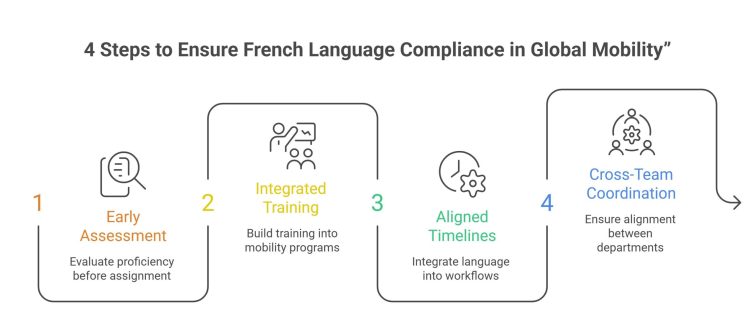
What HR Leaders Should Do Now
The Competitive Advantage of Getting This Right
Organizations that treat language as a strategic priority—not just a compliance requirement—gain a measurable advantage in global mobility outcomes.
By proactively investing in language readiness, companies can:
- Accelerate employee integration and productivity
- Increase assignment success rates
- Improve retention of international talent
- Reduce unexpected costs and compliance risks
In an increasingly regulated global landscape, language preparedness is no longer just about communication—it’s a key driver of performance, compliance, and long-term mobility success.


