The Skills Employers Want Most in 2026

The job market is no longer about job titles. It’s about skills.
Have you noticed that job postings look different lately? You’re not imagining it. Employers are focusing more on what you can do than what your title has been.
According to LinkedIn’s 2026 Skills on the Rise report, the future of work skills is shifting fast. Nearly half of recruiters now explicitly use skills data to fill roles, signaling a meaningful change in how companies evaluate talent.
So which skills actually matter now, and how do you build them?
For HR and global mobility leaders, this shift has real implications. Not just for how you hire, but for how you support and develop the talent you’re moving around the world.
Skills Are the New Job Title
Skills-based hiring is replacing the traditional formula of matching a candidate’s past titles to an open role. LinkedIn’s data shows companies are prioritizing adaptable skills over linear resumes or traditional degrees.
The reasoning is straightforward. In a rapidly changing workplace, the ability to learn and apply new skills matters more than a specific career path. This is especially relevant for relocated employees, who are often asked to step into new environments, new teams, and sometimes entirely new ways of working.
Top 10 In-Demand Skills in 2026
Based on current workplace trends and LinkedIn data, the skills employers want most include:
- AI literacy
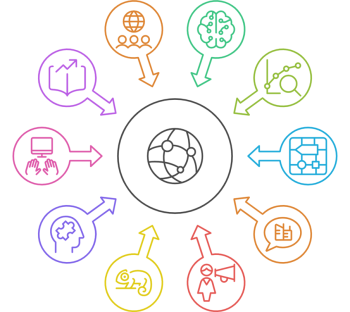
- Data analysis
- Strategic thinking
- Communication
- Leadership
- Adaptability
- Problem-solving
- Digital collaboration
- Storytelling
- Cross-cultural intelligence
AI Workplace Skills Are Rising in Importance
It’s no surprise that AI skills in the workplace dominate LinkedIn’s 2026 list. The top in-demand skills for 2026 include AI engineering and implementation, AI business strategy, and responsible AI practices.
These aren’t niche technical capabilities anymore. They’re appearing across functions from finance and HR to marketing and operations. AI fluency is becoming less like a specialized skill and more like a baseline, similar to how digital literacy evolved over the past decade.
To understand how this plays out specifically in talent mobility, see how AI is already reshaping global workforce programs. The competitive edge isn’t simply knowing AI, but knowing how to apply it in ways that drive real business outcomes.
What are Employers Really Looking For?
AI Skills
What: Ability to use and apply AI tools in business contexts
Why it matters: AI is now central to productivity, automation, and decision-making
How to build it: Practice using AI tools daily and take foundational courses
Tools: ChatGPT, automation platforms, Python
Data Analysis
What: Interpreting data to drive decisions
Why it matters: Organizations are increasingly data-driven
How to build it: Learn Excel, SQL, and visualization tools
Tools: Excel, Tableau, Power BI
Strategic Thinking
What: Connecting day-to-day work to long-term business goals.
Why it matters: Employers need people who can think beyond execution and drive direction.
How to build it: Study business frameworks and analyze case studies.
Tools/examples: SWOT analysis, strategic planning models
Communication
What: Clear, effective communication across teams
Why it matters: Essential for leadership and collaboration
How to build it: Practice writing, presenting, and feedback
Tools: Presentation platforms, communication frameworks
Leadership and Mentorship
What: Guiding teams and developing others
Why it matters: Leadership and mentorship skills are rising alongside AI
How to build it: Seek mentorship and leadership training
Tools: Coaching frameworks, leadership programs
Adaptability and Problem-Solving
What: Navigating change and solving complex challenges
Why it matters: Rapid workplace change requires flexibility
How to build it: Take on new challenges and cross-functional work
Tools: Design thinking, problem-solving frameworks
Problem-Solving
What: Identifying issues and developing effective solutions.
Why it matters: As routine tasks are automated, complex problem-solving becomes more valuable.
How to build it: Practice structured thinking and real-world problem scenarios.
Tools/examples: Design thinking, root cause analysis
Digital Collaboration
What: Working effectively in remote and tech-enabled environments.
Why it matters: Global and distributed teams are now the norm.
How to build it: Use collaboration tools consistently and learn best practices.
Tools/examples: Slack, Microsoft Teams, Asana
Storytelling
What: Communicating ideas through clear, compelling narratives.
Why it matters: Helps translate data and strategy into action and influence decisions.
How to build it: Practice presenting ideas with structure and visuals.
Tools/examples: PowerPoint, narrative frameworks
Cross-Cultural Intelligence
What: The ability to work effectively across cultures.
Why it matters: Critical for global mobility, international teams, and inclusive leadership.
How to build it: Gain exposure to different cultures and learn cultural frameworks.
Tools/examples: Cultural training programs, global team experience
Hard Skills vs. Soft Skills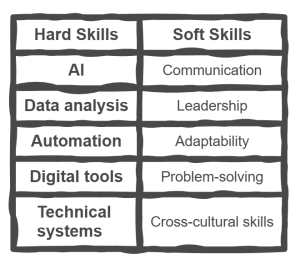
Both are essential. The most effective professionals combine technical capability with human-centered skills.
How to Build What Employers Want
For professionals focused on career development skills, the advice is practical.
Start with a skills inventory. Take stock of what you currently offer, identify gaps relative to the roles you’re targeting, and make those skills visible and searchable. Recruiters are looking for capabilities directly, not just job history.
How to Build In-Demand Skills in 2026
To stay competitive in the future of work, focus on consistent, practical development:
- Take online courses (Coursera, Udemy, LinkedIn Learning)
- Work on real-world projects
- Use AI tools regularly to improve productivity
- Share your learning on LinkedIn or a portfolio
- Seek mentorship and feedback
For HR leaders, this means enabling access to learning, not just tracking it.
Real-World Examples
- A marketing professional using AI tools can automate campaign execution and focus more on strategy and creativity.
- A finance professional using data analysis can turn insights into better business decisions.
- A relocated employee with strong cross-cultural skills can integrate faster and lead more effectively.
Future Skills Trends Beyond 2026
The future of work skills will continue to evolve. Key trends include:
- AI-human collaboration becoming standard
- Continuous learning replacing static career paths
- Hybrid roles combining technical and human skills
- Skills-based hiring accelerating further
Discover how real-time data and AI-powered insights streamline global talent tracking. Watch the SmartSights Video in action.
FAQ:
What skills will be most in demand in 2026?
AI literacy, data analysis, communication, leadership, and adaptability are among the most in-demand skills in 2026.
Is AI replacing jobs or changing them?
AI is changing jobs by automating tasks and shifting focus toward higher-value work.
What are the best skills to learn today?
AI skills, digital skills, and communication offer the strongest return across industries.
How can I future-proof my career?
Focus on continuous learning, adaptability, and building both hard and soft skills.
Conclusion
The future of work is skills-based. The companies investing in that reality now, and the mobility programs supporting it, will have a meaningful edge.
Want to stay competitive in 2026? Start building these skills today, because the future of work rewards those who adapt fastest.
Insights + Resources
View all
Relocation Program Reviews, Assignee Wellbeing & Global Mobility Updates. September 2026 Insider

Relocation Mistakes That Cost Up to $1.25 Million

Why the UK Is Still a Top-3 Destination for Global Talent in 2026
