Understanding Global Assignment Costs: A Guide to Managing International Mobility Expenses

As confidence in the U.S. economy surges, more companies are seeking to establish, strengthen, or expand their global presence. This often involves expatriating talent to fill key positions in other countries. For many organizations, providing global assignment opportunities is a strategic way to enhance employees’ knowledge and skills, which is vital for staying competitive in today’s interconnected world. The Financial Impact of Global Assignments
For many organizations expanding internationally, global assignments are essential for developing leadership, entering new markets, and supporting global operations. However, international assignments can represent a significant investment for employers.
From relocation expenses and housing allowances to tax equalization and immigration support, global assignment costs can quickly add up. Without careful planning and cost management, these expenses may impact the overall effectiveness of a global mobility program.
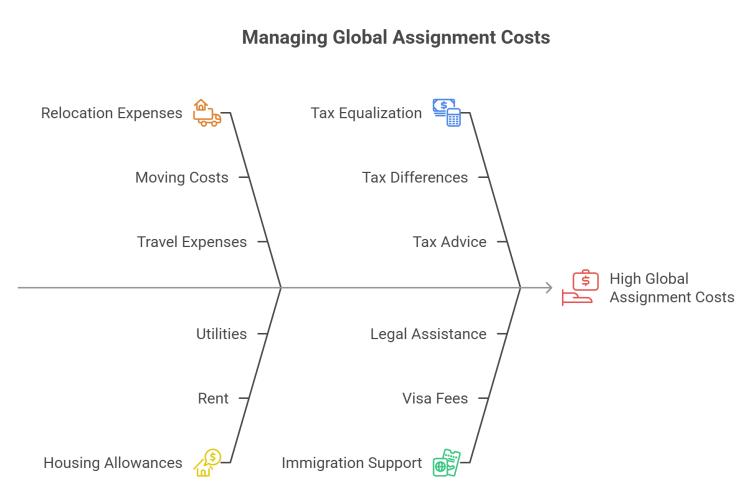
These cost categories illustrate why global mobility programs require strong planning and oversight. Each assignment includes multiple financial components that must be coordinated between HR, finance, relocation partners, and the employee, and with sensitive personal and financial data flowing across all of those parties, protecting employee data throughout the assignment lifecycle is part of that oversight responsibility.
Organizations that clearly understand these cost drivers are better positioned to manage budgets while ensuring employees receive the support they need during international relocations.
Understanding the primary cost drivers and implementing the right strategies can help organizations control expenses while still providing a positive relocation experience for employees.
Whether your company is experienced or new to managing global assignments, the associated costs can be daunting. However, with proper management, these assignments can significantly contribute to achieving your company’s global business goals.
Consider this: Sending an employee and a family of three on a three-year global assignment could cost over $1 million. It’s no wonder that many global companies perceive traditional overseas assignments as cost-prohibitive. Some have even reduced, frozen, or eliminated their global assignment programs. Despite this, companies still need to place the best talent in the right locations, and sometimes that talent requires a global transfer. This makes managing relocation costs crucial.
What Costs Are Included in a Global Assignment?
A global assignment involves far more than simply relocating an employee from one country to another. Companies must consider a wide range of costs associated with supporting employees and their families during an international move.
Some of the most common global assignment costs include:
• Household goods shipment and relocation logistics
• Temporary housing and long-term accommodation support
• Cost-of-living allowances
• Immigration and visa processing
• Tax equalization and compliance support
• Travel expenses for the employee and family members
• Destination services such as home search and school assistance
Typical Cost Breakdown for Global Assignments
The cost of an international assignment varies widely depending on the destination, the employee’s role, and the level of support provided by the employer. In many cases, a single assignment can range from $50,000 to over $200,000 annually.
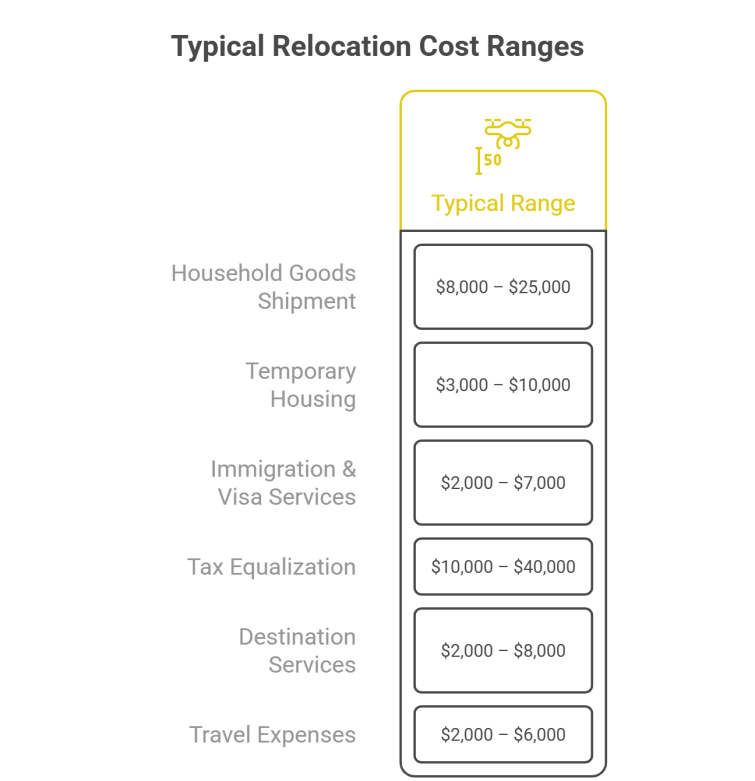
For example, relocating an employee from the United States to Singapore may require international household goods shipping, temporary housing, tax equalization support, and school search assistance for accompanying children. When combined, these services can significantly increase the total cost of the assignment.
Organizations that proactively plan for these costs are better positioned to control budgets and ensure a smooth relocation experience for their employees.
Key Strategies for Managing Global Assignment Costs
If your organization is planning global assignments, there are ways to reduce costs without compromising operational efficiency or employee productivity. Balancing employee support with cost management is challenging but achievable. Here are some of the major expenses associated with a global assignment and how to manage them effectively:
- Candidate Assessment: Evaluate whether the employee is the right fit for the assignment.
- Pre-Decision Assessment: Ensure that the employee’s needs and family align with the business goals of the assignment.
- Immigration: Obtain the necessary documentation for the assignment, which will vary based on the purpose of the transfer.
- Tax Implications and Assistance: Understand the tax responsibilities in both the home and host countries and provide necessary assistance, including consultation and preparation.
- Host Country Housing: Offer reasonable housing and utility costs according to regional guidelines based on family size and location.
- Allowances:
- Cost-of-Living Allowance (COLA): Compensate for the cost difference between home and host locations.
- Transportation Allowance: Provide a car for the duration of the assignment.
- Hardship Allowance: Offer additional compensation for assignments in challenging locations.
- Cultural and Language Training: Help the employee and their family adapt to the host country’s culture and language.
- Home Finding and Destination Services: Assist with locating housing and setting up necessary accounts in the host country.
- Departure and Repatriation Services: Manage home sale, lease termination, and the return of the employee to the home country after the assignment.
- Global Household Goods and Temporary Living: Handle the transportation or storage of household goods and provide temporary housing.
Key Factors That Influence Global Assignment Costs
Several factors influence the total cost of international assignments. Understanding these variables allows HR leaders and global mobility teams to plan more effectively and allocate resources strategically.
• Destination cost of living
• Housing market conditions in the host location
• Assignment duration
• Family size and accompanying dependents
• Tax policies and equalization requirements
• Shipment volume and logistics complexity
Enhance Your Global Mobility Program
To effectively manage these costs, it’s essential to partner with experienced relocation service providers. Our Global Mobility Services offer comprehensive solutions to support your organization’s global assignment needs while optimizing costs.
Managing global assignment costs is a critical component of building a successful global mobility program. With the right planning, policies, and relocation support, organizations can control expenses while ensuring employees have the resources they need to succeed abroad.
Partnering with an experienced relocation management company can help HR teams streamline processes, improve cost visibility, and deliver a more positive relocation experience for employees and their families.
To learn more about managing global assignment costs, download our free guide.


